Building My Own Local SEO Workstation
July 2, 2026 • 5 min read
I have used SEO tools for years because they are useful and sometimes necessary. When you build websites, publish projects, test ideas, or maintain client sites, you need to know what is happening. Are the pages crawlable, are titles missing, are redirects wrong, is Search Console flagging problems, is the site improving or getting worse. The tools that answer those questions well are also expensive, and that is where they stop making sense for me.
Ahrefs is a great product, and I am not building this because I think it is bad. I am building it because paying for a big hosted platform every month does not fit the way I actually work. Most of the time I need a focused workstation for my own sites, my local projects, and the websites I maintain. I do not need a SaaS clone with billing, teams, hosted queues, and inflated numbers. I need something that runs locally, stores real evidence, and lets me shape the workflow around my own projects. So I started building it.
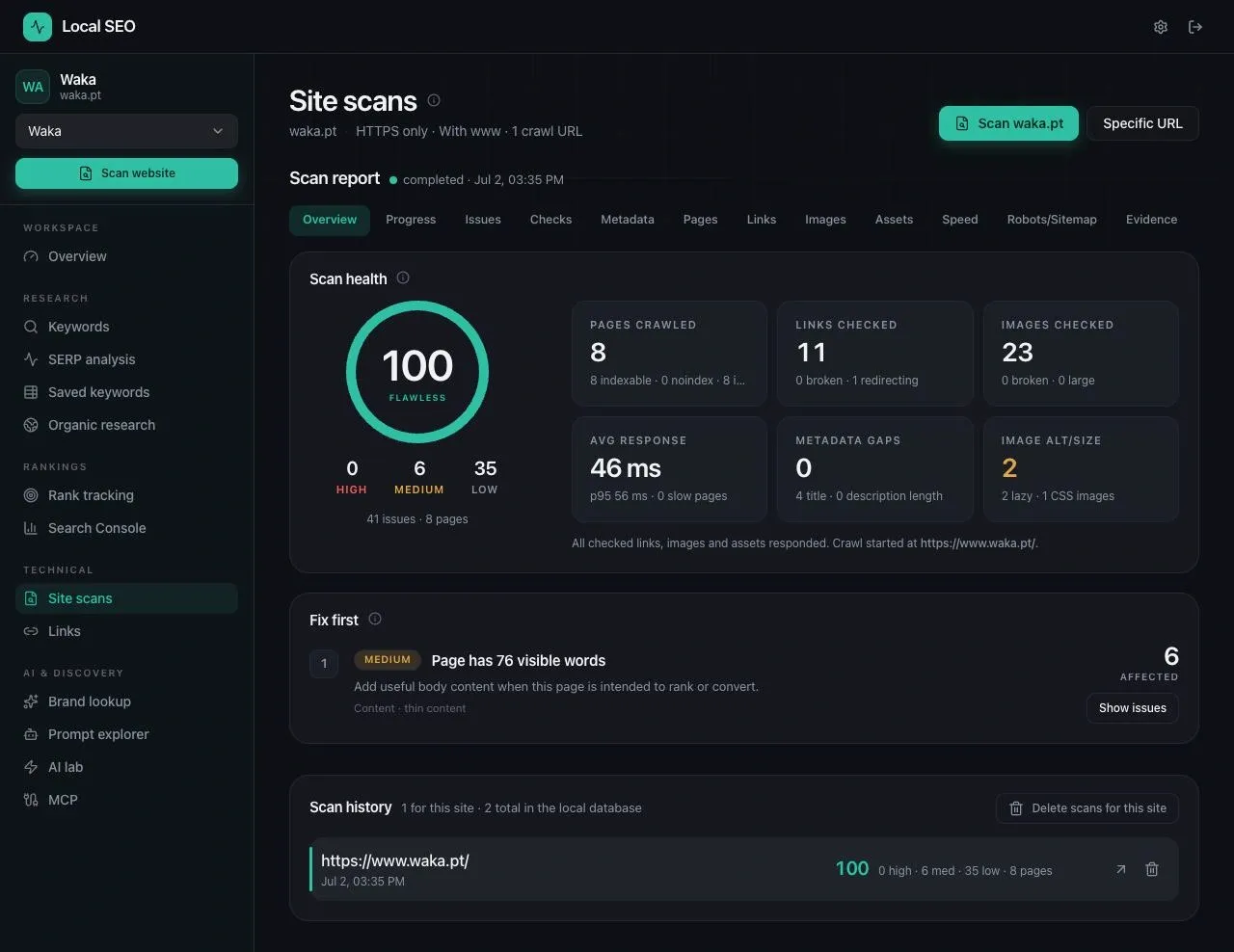
This is not another generic SEO dashboard. The idea is simpler than that. One local place where I can manage sites, run technical scans, save keyword research, import real data, track rankings, connect Search Console, and bring in AI where it actually helps. The whole thing is local-first: Bun, a Hono API, a React interface, and SQLite as the source of truth. Sites, scans, keywords, imports, rank tracking, backlinks, AI jobs, and settings all live locally. No hosted account, no fake team system, no billing page, no usage layer pretending to be infrastructure.
That local-first choice is really about honesty. One thing I dislike in a lot of SEO workflows is how easy it is to end up staring at numbers that feel precise but are not connected to anything you can verify. Traffic estimates, backlink counts, keyword volumes, and difficulty scores are only useful when the source is clear. So the app follows one rule: if there is no real crawl, no import, and no Search Console data behind a number, it says so. It should never invent rows just to make a screen look finished.
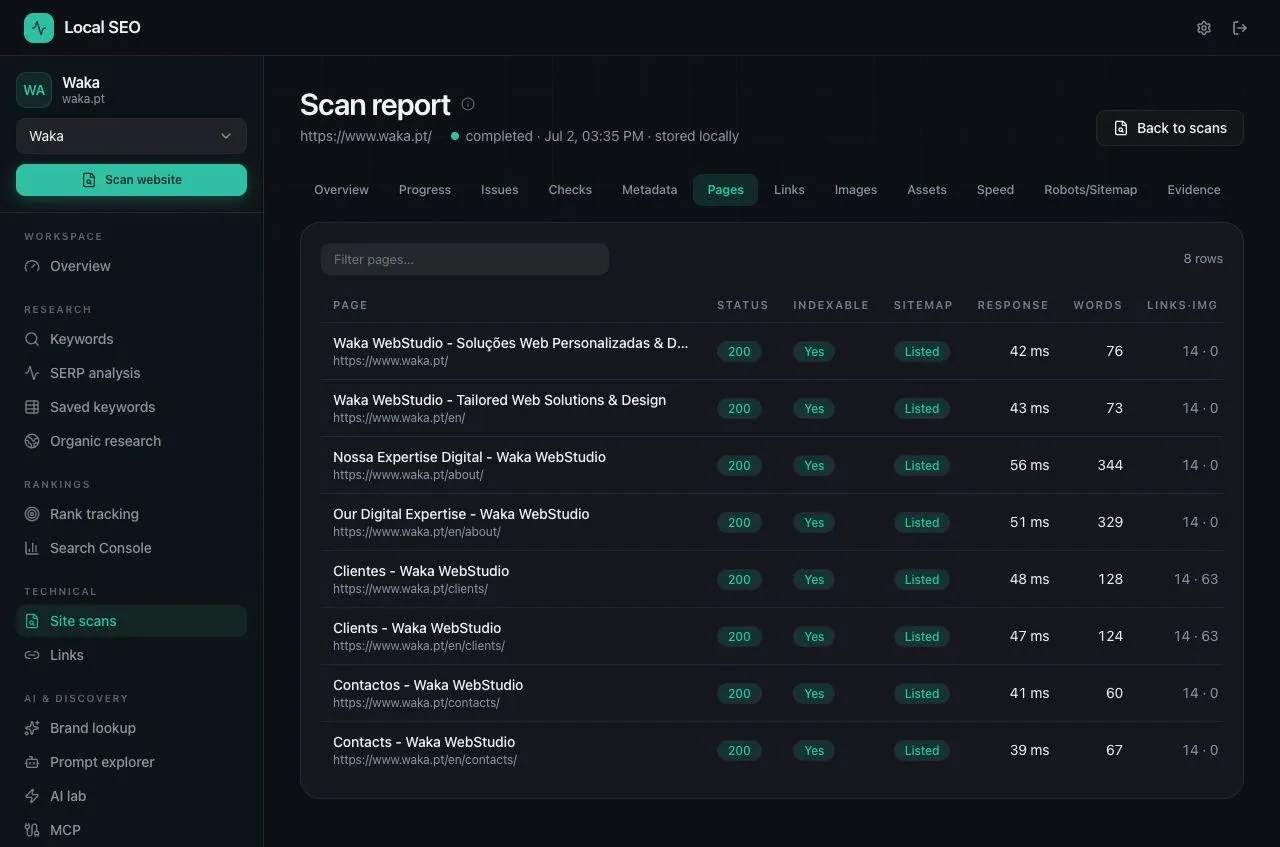
The first big feature is the site audit, and it is the part I reach for most in other tools. I add a site, choose how it should be crawled, and get a clear technical report stored locally. Because everything runs on my machine, I can also point it at localhost projects while I am still building them. That means I can catch title, description, link, image, and redirect problems before a site goes public, instead of shipping first and finding issues later. SEO becomes part of the build, not a cleanup job afterward.
The second part is keyword and research work, and this is where cost usually becomes the problem. I do not need a giant cloud database open all month. I need to research a set of terms, save the ones that matter, tag them, attach metrics when I have them, and tie all of it to the site I am working on. Keywords get researched, saved, and queried by site. Search Console can be connected or imported. Rank tracking runs for the terms I care about. Organic research and backlinks are built around real imports and providers rather than placeholder data. It is slower and more deliberate than opening a massive SaaS tool, but that is the point. I want my own SEO database, grown from my own projects.
The third part is AI, and I do not want it in here as decoration. I want it where it moves the work forward. Local Codex jobs can be stored in SQLite, and the app can expose its data through MCP tools, so the AI side works with real scans, real keywords, and real site records instead of guessing from scattered notes. A lot of my process now runs on agents, code review, and structured prompts, and if AI is going to help with SEO it needs the same source of truth as the app. It should be able to read a scan, understand the issues, help prioritize fixes, or draft a content plan from saved data. The value is not that AI is involved. The value is that it is grounded in real local data.
The real payoff in building this myself is control. I can shape the app around how I work, keep the interface focused, and add only the features I need. I can store data in a format I understand and make the scanner care about the kind of sites I actually build. This will never match Ahrefs on backlink index, keyword database, or scale, and that is fine. It is not trying to. What it can replace is my day-to-day workstation: technical audits, saved site data, scan history, keyword organization, Search Console imports, rank tracking, backlink imports, and AI-assisted analysis. That is more than enough to make it worth using.
It also gives me something a subscription never will, which is ownership of the workflow. The data is mine, the app is mine, and the priorities are mine. If I need a new report, I build it. If I want a different scoring rule, I change it. That is usually why I build tools in the first place. Not because the existing ones are useless, but because they are built for everyone, and once I use something often enough I want a version shaped around my own work. This app is exactly that: local, honest, and practical. It is still early, but I keep opening it, I keep scanning sites with it, and I keep saving data there instead of in random files. It's going to be a work in progress, but it's so cool to guide and steer our own tools using three decades of knowledge.